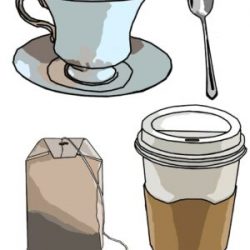
IELTS Speaking part 1 | Tea and coffee

coffee, cup, tea

Do you prefer to drink tea or coffee?

When was the last time you had a cup of tea or coffee?

Is coffee popular in your country? (Why/why not?)

If visitors came to your home would you offer them tea or coffee?

Language focus

In most countries there is a preference for either tea or coffee, however, coffee drinking has increased in popularity in the last few decades.

Think about these questions –

  1. Do people in your culture usually drink tea or coffee?
  2. If tea, what kind of teas do people drink?
  3. Has coffee become more popular in your country?

Examples

  • I prefer to drink tea, usually Longjing tea in the summer and Oolong in the winter. Coffee has only been popular for the last decade in my country, but I am not a fan as I find the taste too bitter. A lot of my friends like to drink it though and buy coffee from Starbucks in the mornings.
  • I prefer coffee and started to drink it a few years ago. Previously, it wasn’t very popular as in my culture as tea is the most popular drink, and we have a strong tea culture. However, I like coffee culture and cafes have become really popular in recent years. I like to meet my friends at a café to catch up.

Longjing (Dragon well) and Oloong are types of tea that are commonly drank in Asia, particularly China and Taiwan.

Fan (n) UK /fæn/ US  /fæn/ – someone who admires and supports a person, sport, team or thing (informal)

Catch up – phrasal verb – to meet someone/people and discuss what has happened since they last met

On the day of your test this is likely to be only a short time ago.

  1. Have a look at the following questions –
  2. Do you drink a lot of tea/coffee?
  3. Maybe you had a cup of coffee to help you stay more alert for the test
  4. In some cultures, it is common to carry a flask with tea or coffee in.

 Examples

  • I had a cup of coffee this morning before I left the house. The first thing I usually do in the mornings is make a coffee. I actually had a couple of cups to help me wake up before I did my test this morning. I need a caffeine hit to stay alert in the mornings, but I don’t drink coffee after 1pm otherwise I find it difficult to sleep at night.
  • I like to carry a flask of tea with me most of the time. I can sip the tea throughout the day, and don’t have to buy any as it can be expensive. So, I didn’t actually have a cup of tea, but did take a sip from my flask before coming into the test centre.

Caffeine (n)  UK /ˈkæf.iːn/ US /ˈkæf.iːn/ – a chemical found in tea and coffee that make people more active.  ‘caffeine hit’ (slang) to have a cup of coffee, to help wake up and be more active

Alert (adj) – UK /əˈlɜːt/ US /əˈlɝːt/ – quick to see, understand and act in a certain situation

As mentioned earlier coffee drinking has increased considerably over the last few decades particularly with global coffee chains such as Starbucks. You may have already answered this question when you responded to the first so you will have to refer back to that response.

Have a look at these questions –

  1. Has coffee drinking increased in your country in recent years? (you may have already answered this question when you responded to the first question)
  2. Why do you think coffee has become popular?
  3. Why is coffee not popular in your country?

Examples

As I mentioned earlier, coffee has only really been popular in my country for the last 10 years or so. The older generation still prefer to drink tea, but the younger generation like to drink coffee because it is something different and they like the café culture from western countries.

Coffee is not that popular in my country as we have always had a tea culture and there are even ceremonies around tea.  We have a lot of teahouses where people like to meet with their friends, similar to cafes in western countries, except we drink tea.  We have so many different types of tea and prices can vary a lot from very cheap to extremely expensive for the best teas.

Café culture (n) – socialising/gathering with friends/family in cafes typical in European countries

Tea ceremony – a special way in which the tea is prepared, served and presented

Tea culture (n) – the way tea is consumed and served at social gatherings

Teahouse (n) similar to a café but only tea is served

Vary (v) – UK /ˈveə.ri/ US /ˈver.i/ – things of the same type that are different to each other

 

This question is going to be related to culture, for example, in China most visitors would be offered a cup of tea. Chinese families rarely if ever have coffee in the house.

Look at these questions –

  1. In your culture is common to give tea or coffee to visitors?
  2. Would you offer visitors anything else other than tea or coffee?

Examples

If visitors come to my home, I will always offer them a cup of tea. I have a lot of different kinds of teas, so they have plenty of choice. I like to buy good quality teas although they can be expensive, but you can really tell the difference between a cheap tea and an expensive one.

When visitors come to my house, I will usually give them an option of tea or coffee. It is down to their preference really. I don’t have a coffee machine at home so if they have a coffee it has to be instant rather than ground. If they don’t want a tea or coffee, I will offer them a soft drink or cup of hot water. People in my country like to drink a lot of water as it is good for our health.

Option (n) – UK /ˈɒp.ʃən/ US  /ˈɑːp.ʃən/ – one thing that can be chosen from a list of  ssibiliti es or the freedom to make a choice

Preference – (n) (C or U) –  UK /ˈpref.ər.əns/ US /ˈpref.ər.əns/ – the fact that you like something or someone more than another thing or person

Facebook
Twitter
LinkedIn

More to explore

Leave a Comment

Are you taking the academic or General test?

Are you taking the academic or General test?